The Power Broker
Trying and failing to read lengthy books is a rite of passage. Be it Thomas Pynchon’s Gravity’s Rainbow or Ulysses by James Joyce.

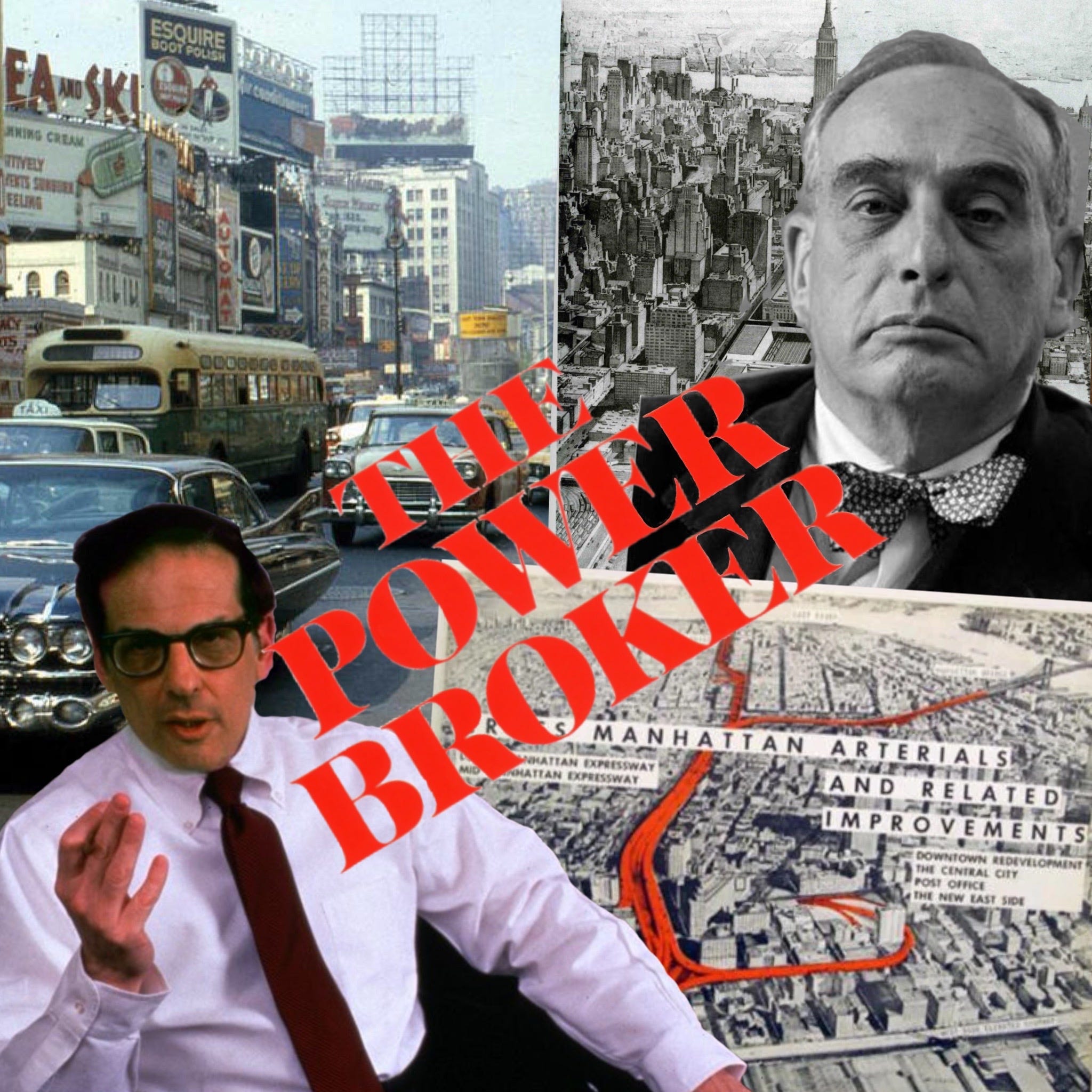
This is a review of "Turn Every Page": Inside the Robert A. Caro Archive, an ongoing exhibition at the New York Historical Museum in Manhattan. I wrote it after visiting the show last September. The piece was shortlisted for the 2025 Observer/Anthony Burgess Prize for Arts Journalism.
Trying and failing to read lengthy books is a rite of passage. Be it Thomas Pynchon’s Gravity’s Rainbow or Ulysses by James Joyce, such literary Everests tend to be taken on in wide-eyed youth, only to be left on a shelf unfinished well into middle age.
Another of those 1,000 page plus literary behemoths is journalist Robert Caro’s The Power Broker, a 700,000-word biography of Robert Moses, a New York City urban planner who, through the sly amassing of political power, redeveloped vast portions of the city while crushing anyone standing in his way.
The 50th anniversary of the book is being marked with an exhibition featuring highlights from Caro’s archive at the New York Historical, which extols the virtues of his ‘leave no stone unturned’ style of journalism to which he has devoted his life.
The exhibition is largely comprised of yellowing letters typed on old typewriters and hastily scribbled fountain pen notes on matchbooks depicting Caro’s struggle to get the project off the ground. Moses flat out rejection, for example, to an interview request in one letter “I am not at all in favour of such a biography and have no time to spend on it”, seemed to have little effect on the intrepid Caro’s morale. He went on to interview over 500 people in Moses’ orbit, as well as those who had unpleasant dealings with him, all captured in handwritten notes rather than on Dictaphone recordings, the use of which Caro believed would cause his subjects to be less than candid.
Caro is fascinated by the getting and use of power and the second half of the exhibition is dedicated to his later biographies of former US president Lyndon Johnson. But whereas Johnson was elected to the US Senate and later the presidency in a landslide in 1964, Moses upturned New York without being elected to anything at all, instead ruling through committee and wining the backing of New York’s powerful governor Al Smith.
That would be all well and good if the changes Moses brought about in New York were for the better, but Caro’s interview notes capture the underhand nature of his decision making, the results of which still bedevil New Yorkers today.
Take the traffic-clogged Long Island Expressway, a Moses project, which runs from Nassau into the city. Moses was advised to buy a sliver of land that runs alongside the expressway so that a light rail line could be built, a proposal he so vehemently rejected because of a dislike for public transport, that he designed the foundations of the road in a way that made future additions impossible.
Moses dislike of mass transit comes up again in the exhibition in relation to the design of Jones Beach State Park on Long Island. Acting from his position as Chairman of the Long Island State Commission, Moses designed the bridges on the freeway that leads to the beach to be lower than usual, so that city buses could not pass beneath. His did so, his critics argue, because he preferred the middle-class car owners over the poorer, working class, African American demographics more likely to take the bus. In short, he took a subtle route to segregating the beach.
Such testimony is captured in the inky typeface produced by Caro’s tool of trade, a Smith-Corona Electra 210 typewriter, which sits in a glass case at the end of the exhibition like a holy relic, like a Winchester 1873 at the end of an exhibition on Billy the Kid.
Yet, it is perhaps the pieces of the show that cast a light on the life of a writer that say the most. Like the word count calendar Caro used to keep a record of the ebbs and flows of his discipline. The exhibition has one from 1971, which shows the months of April, May and June filled out in red ink. On most days Caro records a figure over 1,000 but there are a smattering of zeros, and on some occasions just a single word like “lazy” or “sick”, which gives hope to anyone struggling to meet a deadline.
Caro’s battles with his long-suffering editors who had to cut down the book’s original million-plus word length to the 1300-page doorstopper it is today, are also captured. Entire chapters were stripped out and thrown into boxes, while the surviving sentences were agonised over, with one note Caro penned shouting off the page “the commas matter!”
The commas, like the rivets in one of Moses’ New York expressways, hold together an almighty structure, one that went on to win the Pulitzer Prize, one this exhibition rightly honours, and one that earns a place alongside those books that test a reader’s will to breaking point but are well worth the journey.